How designers at Fieldguide went from filing tickets to opening PRs

For the past year, AI has been a core part of how we operate within and between teams: we can ideate and prototype explorations fast enough, using tools like Claude Design, to have alignment conversations with cross-functional leads (PMs and tech leads). Most notably, AI has helped us compress the distance between roles, such as design, product, and engineering, converging on scope earlier. This shows how AI is embedded between our teams, not just within one.
Designers ship, not just hand off specs
At a fast-paced start-up, moving fast would often come at the cost of quality, which often meant UX/UI inconsistencies, such as spacing being off by 2px or casing inconsistencies. Routing these types of tickets would take 3-5 days. The most time-consuming part was the back-and-forth: we’d leave QA feedback for the engineer, they’d work through it, and when we QA’d again, we’d find more things.
Now, our designers own these improvements end-to-end using agentic engineering tools, including the part that used to require waiting on an engineer's availability. This means the loop closes fast enough that design stays in the room for the whole process, not just handing off designs. This has reduced the time needed to actually see the changes live: it's gone from 3-5 days to within 24 hours on average.
We use Forge (our internal agentic engineering tool) with Claude Code and Codex. Instead of spending time designing simple updates and then writing out the ticket for what needs to change, we can simply describe what the change should be on the ticket. Afterwards, Forge opens a pull request on GitHub with a preview link and visual verification, and then we’re able to start reviewing it. We can chat with Forge right there to get things exactly right. Once things look good from our side, we generally tag in an engineer for a final code review, typically within a few hours.
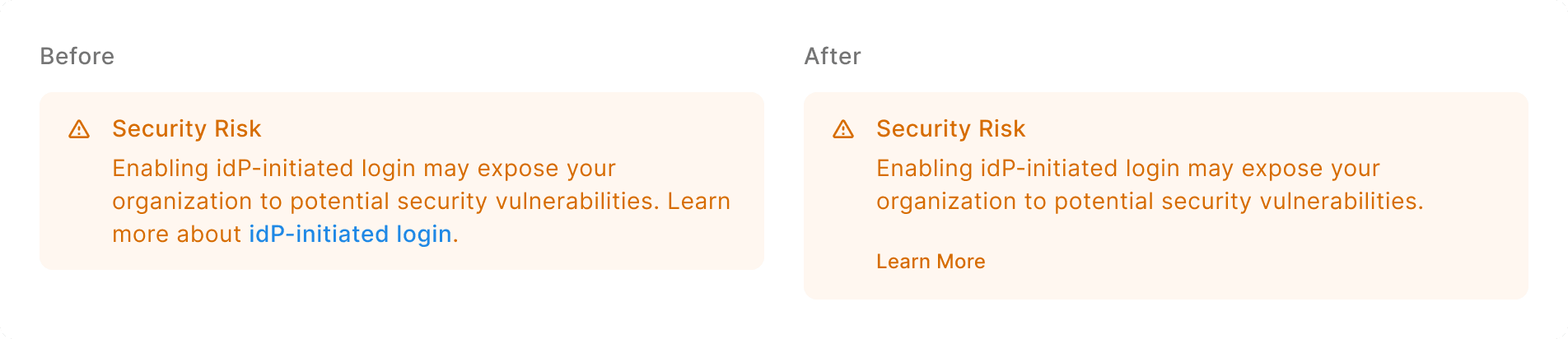
For example, we migrated our alerts to a new component, and I spotted an old hard-coded color. I wrote the ticket to update it and sent it to Forge. After it was done, I QA’d it, confirmed the changes looked good within our preview environment, and then tagged in an engineer to review the code changes.
More recently, this process gave us a fast turnaround on an accessibility fix for colorblind users. We received customer feedback that it was difficult to differentiate between an active and inactive sheet tab, since the colors we used looked too similar for them to distinguish. We were able to release a fix within a day: updating the icon to a filled variant so we aren’t relying on color alone. This also helps with customer relationships, as it shows we are taking their feedback seriously.

Design <> AI Maturity: Where we are
Most maturity frameworks, such as Gartner's AI adoption model, AI Maturity Model for Software Engineering Teams, and Training Industry's model for design teams, describe roughly the same five-stage journey: teams start with ad hoc, individual experimentation, move into tool-curious but ungoverned use, then repeatable workflows, then strategic integration across roles, and eventually reach a transformational state where AI is just how the work gets done.

Many design teams in the industry are still in the ad-hoc, single-person experimentation phase. We're past that: agentic tools are part of the standard path from AI-assisted ideation to cross-functional alignment.
If this sounds interesting, check out our open positions. We're hiring!
Annmarie Cong
Product Design at Fieldguide